


Kill Shot Bravo: 3D Sniper FPS
4.466.95K Reviews
App Specs
- Version
- 14.6.1
- Updated On
- License
- Free
- Downloads
- 50,000,000+
- Developer
- Supercharge Mobile
- Categories
- Action
- Platform
- Android
Screenshots
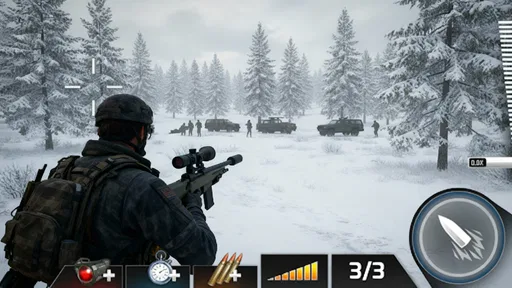
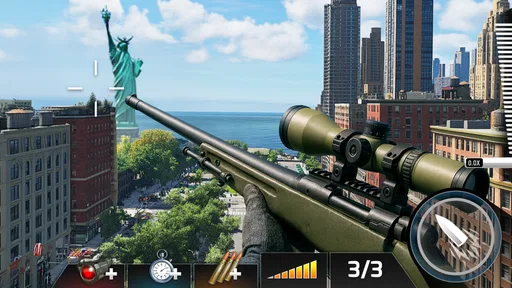
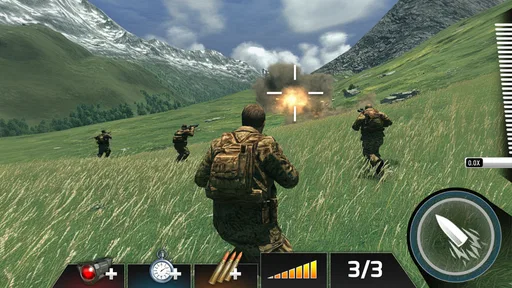
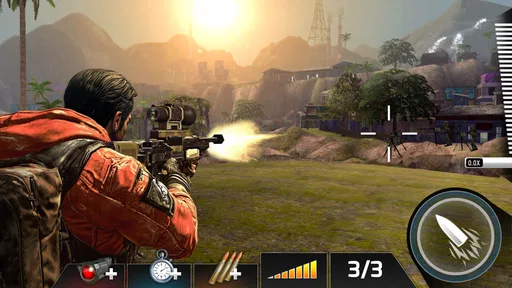
 Analysis by AppCompare
I went into Kill Shot Bravo: 3D Sniper FPS expecting a straightforward shooting game, but its appeal is more specific than that. It is built around the satisfaction of lining up a target, taking one deliberate shot, seeing the result, and immediately deciding whether to try the next mission. That rhythm makes it easy to play in short bursts, while the first-person presentation gives even simple objectives a little tension.
This is an online multiplayer action game from Supercharge Mobile, although much of the appeal comes from its mission-based shooting structure rather than from treating every match like a long competitive session. The game is free to start, carries a Mature 17+ rating, and includes optional purchases priced from $0.99 to $94.99 per item. I would describe it as a good fit for players who enjoy sniper games with quick objectives, weapon progression, and a large selection of military-themed situations.
How the first shot sets the pace
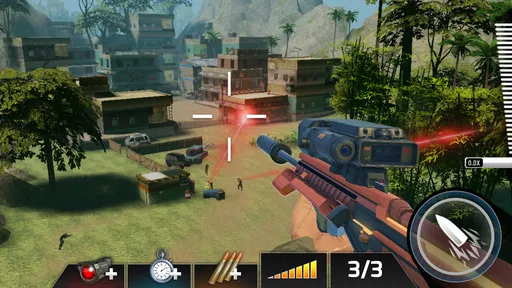
The opening action is simple: choose a mission, study the scene, locate the target, and fire. That simplicity is important because the game does not ask me to learn a complicated control scheme before I can enjoy it. The focus stays on aiming, timing, and understanding what the mission wants from me.
Sniper games live or die by the feel of the shot, and this one makes the moment before firing more important than the amount of movement afterward. I usually spend more time scanning the environment and waiting for a clean opportunity than moving around. That gives each objective a compact puzzle-like quality. The target may be obvious, but the best result often comes from pausing long enough to make the shot count.
The first useful habit is to avoid firing as soon as a target appears. I found that checking the full scene first is more reliable than reacting to the nearest figure. Missions can place several visual distractions around the objective, so a quick survey helps prevent wasted attempts. This is one of the small details that separates the game from a basic gallery shooter where every target is simply waiting in the center of the screen.
The controls are approachable for touchscreens, which matters on a phone. I can concentrate on adjusting the aim without feeling as if I am wrestling with a full console-style interface. That said, precision still depends on the device and on how comfortable I am holding it. A larger screen can make careful aiming easier, while a smaller phone may feel more cramped during delicate shots.
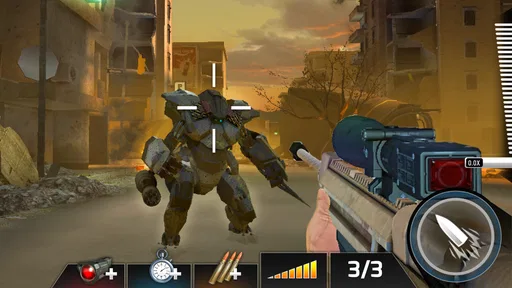
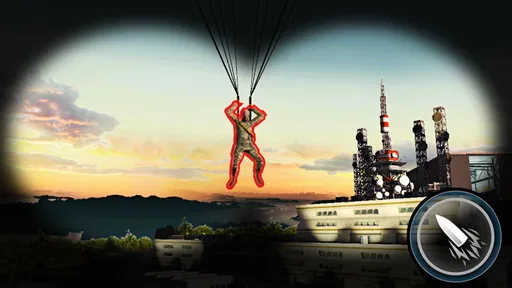
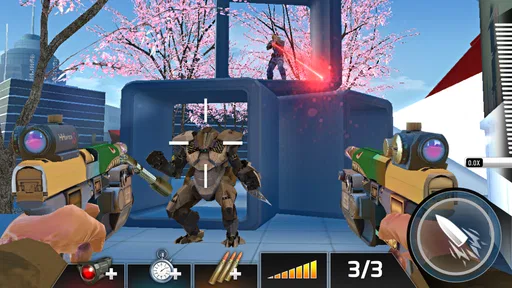
The game’s 3D presentation also contributes to the opening moment. It is not just a flat target board; the environments give the missions a sense of place, and the viewpoint makes distance and positioning feel relevant. I would not mistake it for a full tactical simulation, but it does enough to make each target feel situated inside a scene rather than pasted onto a menu.
Worth Reading Before You Choose

EA SPORTS FC Mobile 26 Is a Bigger Football Game, but It Takes Time

Flipboard Shows What News Apps Must Do Beyond the Feed

Switching to Android Auto Means Rethinking Your Driving Routine

Google Calendar Makes a Crowded Week Easier to Manage

Ludo King Makes the Most of the Minutes Between Plans

Baby Panda World Brings Quick Play to Modern Phones, but Its Game Library Feels Busy
Why the feedback rhythm works
After the shot, the game gives me a clear result quickly. A successful hit feels immediately readable, and a failed attempt tells me that I need to adjust my approach rather than leaving me unsure about what happened. That direct feedback is the main reason another mission is tempting. I am not waiting through a long sequence just to learn whether a small mistake ended the attempt.
The rhythm is built from short cycles: identify, aim, fire, receive feedback, and move on. When everything goes well, the cycle feels clean and rewarding. When I miss, the failure is usually understandable enough to encourage a retry. This is a stronger design choice than burying the result under lengthy animations or complicated menus.
There is also a nice difference between the emotional impact of an ordinary hit and a more carefully placed shot. The game encourages me to improve my accuracy, not merely to tap as quickly as possible. That creates a modest skill curve: beginners can complete objectives by learning the controls, while experienced players can focus on cleaner execution and better timing.
One practical tip is to treat the scope as a planning tool rather than a panic button. I get better results when I use it to inspect the scene, settle the crosshair, and fire with intention. Rapidly dragging around the screen may feel active, but it makes small corrections harder. The game rewards a calm hand more than frantic movement.
The feedback is especially effective during a short break. If I have only a few minutes, I can complete a small piece of progress without committing to a long match. That makes the game more suitable for commuting, waiting rooms, or a quick evening session than action games that require a large uninterrupted block of time.
Progression gives each success a purpose
A shot would become repetitive if it had no consequence beyond a brief visual reaction. The reward structure gives missions a reason to connect. Completing an objective feels like a step toward improving the loadout and handling more demanding situations, rather than a disconnected target practice exercise.
The military setting supports that sense of forward movement. New missions and different environments help break up the visual routine, while the variety of objectives keeps me from approaching every encounter in exactly the same way. Even when the underlying action remains familiar, a change in context can make the next assignment feel worth opening.
This is where the free-to-play structure deserves a realistic look. I can begin without paying, but optional purchases are part of the experience. For a casual player, the sensible approach is to treat spending as a choice rather than as a requirement for enjoying the basic loop. I would not recommend buying anything immediately. First, I would play enough missions to decide whether the aiming and progression actually hold my attention.
The most useful reward is not simply receiving something after a mission; it is having a reason to use that reward. Improving equipment or preparing for a tougher objective matters when it changes how I approach the next shot. If progression starts to feel like a reason to repeat the same task without adding a meaningful decision, the loop becomes less interesting. That is the point where patient players should decide whether the game is still earning their time.
Another non-obvious advantage is that the mission format makes improvement easy to notice. In a large multiplayer shooter, a poor result can be caused by teammates, map knowledge, or an opponent’s reaction. Here, the connection between my own aim and the outcome is clearer. That makes it a useful choice for someone who wants to practice touchscreen precision without the pressure of a full competitive lobby every minute.
At the same time, players looking for a deep team-based strategy game may find the reward structure too individual and repetitive. The store describes online multiplayer player-versus-player action, but my strongest impression comes from the focused sniper loop. If your priority is coordinated squad play, constant movement, or broad weapon roles, another action game may offer more variety.
The reset is what makes another mission appealing
Every mission eventually resets the situation. I return to the selection screen, review the next objective, and decide whether to continue. That reset is not a weakness by itself; it is what keeps the game from becoming exhausting. A failed shot does not have to ruin an entire evening, and a successful mission does not demand a long commitment before I can stop.
The best sessions follow a natural pattern. I start with one mission, play a few more because the result was satisfying, and then stop when the objectives begin to feel familiar. The game’s short-cycle design makes that possible. It is easy to put down after a single attempt, but the immediate availability of another mission creates a strong “one more” effect.
That structure also makes failure manageable. In a long campaign, repeating a difficult section can feel like lost time. Here, the reset is quicker and the lesson is more focused: I missed because I rushed, chose the wrong moment, or failed to read the scene carefully. The next attempt gives me a chance to apply one specific correction.
My advice is to use the reset deliberately. If I start missing shots because I am rushing, I take a break instead of treating every failure as a reason to spend resources. The game is more enjoyable when I see retries as practice and progression as a bonus, not when I chase a perfect result at any cost.
The reset can feel less satisfying for players who prefer uninterrupted narrative campaigns. The mission structure emphasizes repeatable action over a cinematic story that carries me from one major event to another. It is also not the best choice for someone who wants realistic stealth systems or expansive exploration. Its strength is the compact decision around each shot, not a large open world.
Who will get the most from it
I would recommend this game to someone who likes mobile action that can be understood quickly but still rewards patience. It works particularly well for players who enjoy sniper themes, short missions, visible progression, and the small satisfaction of improving their aim. The Mature 17+ rating is worth taking seriously, so it is not a title I would choose for younger players.
A realistic use case is a person with a busy day who wants a game that can fit between other tasks. After finishing a work break, I can open a mission, focus on one target, collect the result, and stop without losing the thread of a long campaign. Later, I can return and continue from the same general progression rather than needing to remember a complicated story or control system.
It is also a reasonable introduction to touch-based sniper games. The basic actions are easy to understand, and the feedback makes mistakes visible. Someone new to the genre can learn to scan before firing, make smaller aim adjustments, and recognize when patience is more useful than speed.
I would tell competitive shooter fans to set expectations carefully. The game includes player-versus-player action, but it should not be approached as a direct replacement for a large-scale arena shooter. Those games usually emphasize movement, team communication, weapon switching, and unpredictable opponents. This title is more satisfying when I want the focused tension of lining up a shot and completing a defined objective.
Players who dislike free-to-play pressure should also be cautious. The game is free, but optional purchases can reach a high price for a single item. My approach is simple: avoid making a purchase until the core missions have proved enjoyable on their own, and decide in advance how much, if anything, the experience is worth to me.
Device support and long-term comfort
The current version is 14.6.1, and the game supports devices running Android 6.0 or later. That gives it a broad technical reach, although practical comfort still depends on the phone or tablet. A stable connection and a screen that allows precise touch control will make a bigger difference to my experience than the minimum operating-system requirement alone.
Because aiming is central, I would test the controls before judging the entire game. If the crosshair feels too sensitive, small changes in how I hold the device can help. I also prefer playing with both hands when possible, since one hand can keep the device steady while the other makes controlled adjustments. These are simple habits, but they matter more here than they would in a menu-driven game.
The game’s popularity gives it a useful sense of confidence for newcomers: it has an average rating of 4.4 from around 635 thousand ratings and has passed 50 million installs. Those figures do not guarantee that every player will enjoy the loop, but they do suggest that the format has reached a substantial audience. I would still judge it by the specific kind of action I want, rather than by popularity alone.
The developer, Supercharge Mobile, has kept the identity clear: this is a sniper-focused action game, not a general-purpose military sandbox. That focus is a strength when I want direct objectives and quick feedback. It becomes a limitation when I want broad freedom, detailed squad tactics, or a constantly changing competitive battlefield.
My verdict on the complete loop
The action begins with a target and a moment of concentration. The feedback arrives quickly enough to make every shot understandable. The reward gives the next mission a purpose, and the reset makes retrying feel manageable rather than punishing. That sequence explains why I often begin with a single objective and end up playing longer than planned.
The strongest reason to try it is the clean connection between aim, result, and the decision to take another shot. It is easy to learn, convenient for short sessions, and specific enough to feel different from a generic run-and-gun game. I especially like it when I want focused action without committing to a long match or complicated setup.
Its limitations are just as clear. Repetition can surface if I am not interested in improving accuracy, the free-to-play purchases require restraint, and the mission format will not satisfy anyone searching for a rich tactical campaign or a team-first shooter. The Mature 17+ rating also narrows its audience.
Overall, I think Kill Shot Bravo: 3D Sniper FPS is worth trying for mobile players who enjoy deliberate shooting and compact objectives. I would start free, learn the aiming rhythm, and give the progression enough time to show whether it keeps me interested. If the pleasure of making one clean shot is enough to make me open the next mission, the game has done its job. If I need constant movement, deep cooperation, or a story that never resets, I would choose a different action game instead.
Pros
- Large variety of sniper rifles and customizable weapon upgrades.
- Many mission types across diverse locations keep the campaign engaging.
- Smooth aiming controls work well on both phones and larger screens.
- Regular events and challenges provide extra goals beyond the main missions.
- Offline play is available for many single-player missions.
Cons
- Energy limits can interrupt longer play sessions.
- Some upgrades and weapons require significant grinding or spending.
- Enemy behavior can feel predictable after repeated missions.
- The game takes considerable storage space and may use extra battery.
- Online features require a stable connection and may include competitive pressure.
FAQs for Kill Shot Bravo: 3D Sniper FPS
What is Kill Shot Bravo: 3D Sniper FPS about?
Kill Shot Bravo is a third-person sniper action game for Android and iOS. You take on missions around different locations, eliminate enemy targets, and complete objectives using a selection of sniper rifles and other weapons. The game combines realistic-looking environments, cinematic shooting moments, upgrades, and a progression system built around increasingly difficult missions.
Is Kill Shot Bravo free to download and play?
Yes, Kill Shot Bravo can generally be downloaded and played for free, but it includes optional in-app purchases. These purchases may provide currency, weapon upgrades, equipment, or other progression benefits. You can play without spending money, although progress may feel slower as missions become more demanding. It is also worth checking the store listing for the current availability, supported devices, and purchase details.
Does Kill Shot Bravo require an internet connection?
An internet connection may be required for several important features, including loading certain missions, synchronizing progress, receiving updates, viewing advertisements, and accessing online events or competitive content. Some parts of the game may work temporarily offline, but the experience is not designed to be completely independent of connectivity. Players should also expect additional downloads after the initial installation.
What are the main gameplay features in Kill Shot Bravo?
The game focuses on precision shooting, target identification, weapon customization, and mission-based progression. Players can use different rifles and equipment, improve their gear, and attempt objectives that may involve eliminating specific enemies or completing challenges under particular conditions. It also offers varied environments and action sequences, giving the basic sniper gameplay more variety than a simple target-shooting simulator.
Is Kill Shot Bravo suitable for children?
Kill Shot Bravo contains frequent shooting, military combat, enemy deaths, explosions, and realistic action themes, so it may not be appropriate for young children. The game can also include advertising, optional purchases, and online-related features depending on the version and device. Parents should review the current age rating, store permissions, and available parental controls before allowing a child to download and play it.


